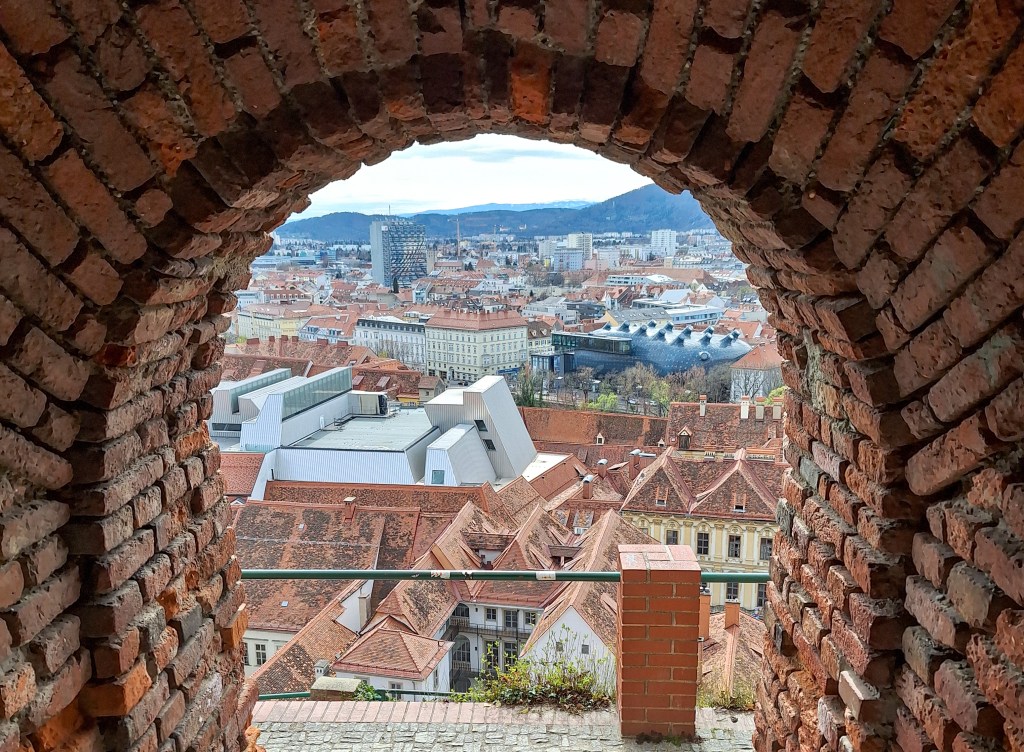
I’m not from Graz, as you know… So when I find one of these famous viewpoints that everyone posts online, I’m like, “Oh, so this is the place?” 😅 Do you know where this view is in the Schloßberg gardens?
I love walking through the ruins because there’s so much history here. Schloßberg is one of the most iconic places in Graz, with a rich past that dates back centuries. But what exactly is the story behind this famous hill? Let’s take a deeper look at its history and explore the most significant places within Schloßberg.
The Origins of Schloßberg
The history of Schloßberg goes back to the Middle Ages, when the first fort was built on top of the hill in the 12th century. The location was ideal for defense, providing a panoramic view of Graz and its surroundings. Over time, the fortress expanded, becoming an important military stronghold.
During the 16th century, when the Ottoman Empire threatened Central Europe, Schloßberg played a key role in protecting the city. Its walls and towers made Graz one of the most secure places in the region. However, by the 19th century, its military importance declined. In 1809, during the Napoleonic Wars, French troops partially destroyed the castle. After that, the ruins were left untouched for many years.
Today, Schloßberg is a beloved landmark, known not only for its history but also for its beautiful gardens, hidden tunnels, and breathtaking views. Let’s explore some of its most important spots!
Best spots to Visit on Schloßberg
1. Uhrturm (Clock Tower) – The Symbol of Graz
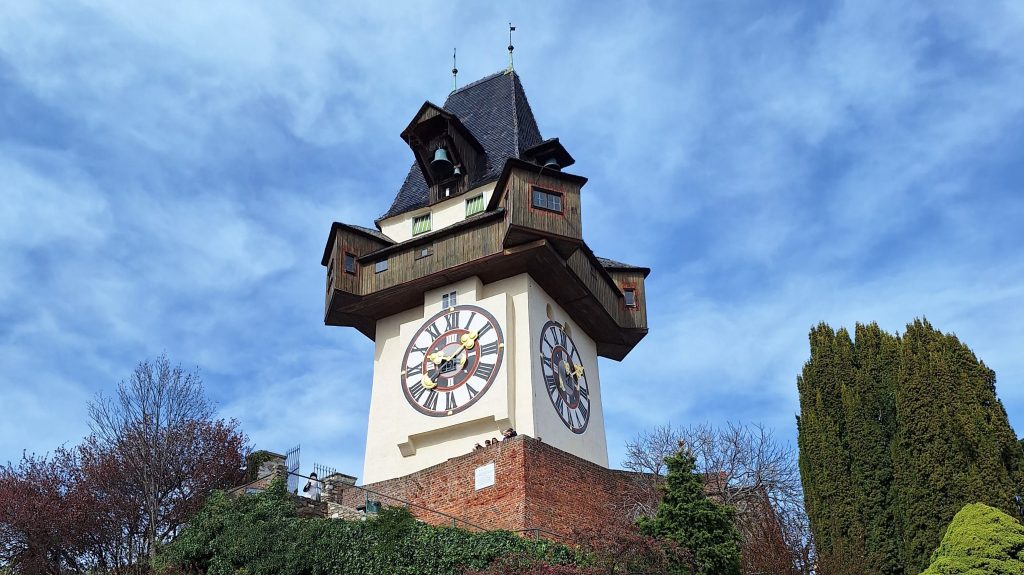
The Uhrturm, or Clock Tower, is the most famous landmark on Schloßberg. Built in the 13th century and modified in the 16th century, it originally served as part of the fortress’s defensive system.
One curious feature of the Uhrturm is its clock: the hands are reversed! The large hand shows the hours, while the small hand shows the minutes. This was done because, in the past, people needed to see the hour from far away, and minute precision was not as important.
2. Glockenturm (Bell Tower) – The Sound of History
The Glockenturm, or Bell Tower, was built in 1588 and houses a massive bell called “Liesl.” This bell weighs over 4,000 kg and has been ringing over the city for centuries. Originally, it was used to warn the citizens of danger, but today it sounds on special occasions.
3. The Schloßberg Tunnels – A Secret Underground World
Did you know that Schloßberg has a hidden underground tunnel system? These tunnels were built during World War II to protect people from bombings. Today, some of these tunnels are open to the public and used for events, exhibitions, and even concerts! The cool temperature inside makes them a perfect escape from the summer heat.
4. Chinese Pavilion – A Peaceful Retreat
The Chinese Pavilion is a beautiful gazebo located in the Schloßberg gardens. It was originally built in the 19th century as a decorative structure, providing a perfect place to rest and enjoy the views of Graz. The pavilion is a great spot for photos and a quiet break from exploring the hill.
5. The Starcke-Haus – A Castle Remnant
This small building is one of the few remaining parts of the old fortress. It once housed soldiers and officials who worked in the castle. Today, it is home to a restaurant where visitors can enjoy traditional Austrian cuisine while surrounded by history.
6. The Schloßberg Lift – A Modern Way to the Top
If you don’t feel like walking up the hill, the Schloßberg Lift is a great option! This modern elevator takes you directly to the top of Schloßberg in just a few seconds. It passes through a glass tunnel, giving you a unique perspective of the inside of the mountain.
7. The Kriegssteig – The Historic Staircase
For those who love a challenge, the Kriegssteig, or War Staircase, offers a scenic but steep climb up Schloßberg. Built in 1914 during World War I, the staircase has 260 steps and provides fantastic views as you ascend.
Schloßberg Today: A Place of History and Leisure
Today, Schloßberg is much more than a historical site—it’s a place where locals and visitors come to relax, enjoy nature, and take in the views of Graz. Whether you walk through the gardens, explore the tunnels, or simply sit at a café near the Uhrturm, you’ll feel the history surrounding you.



 Graz Magazine
Leave a comment